Written by: Strategos BIP Analysis Team

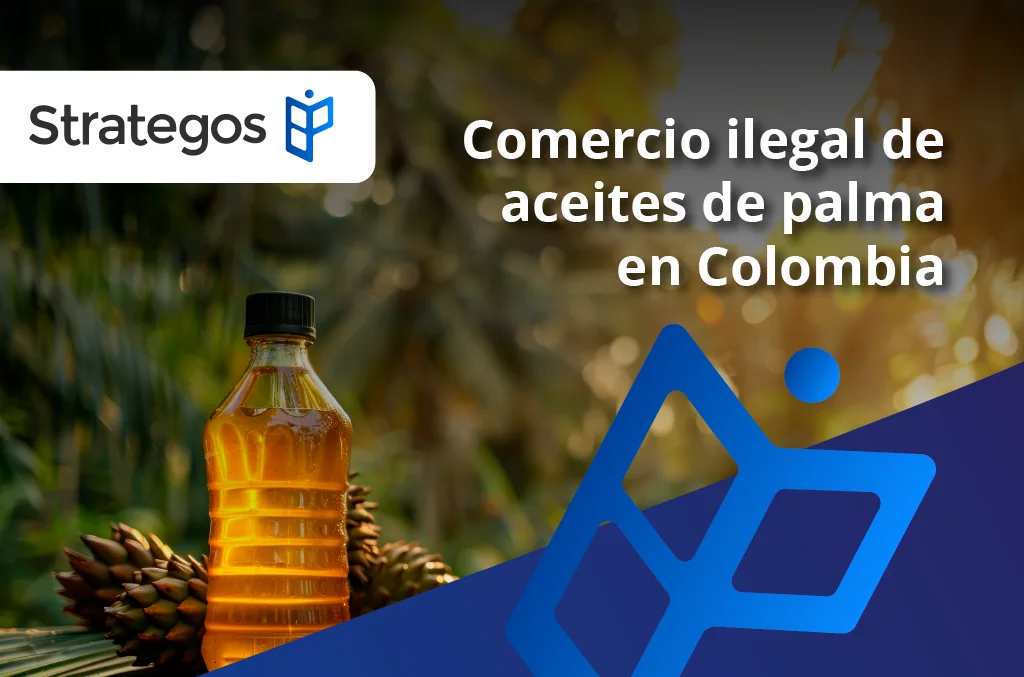
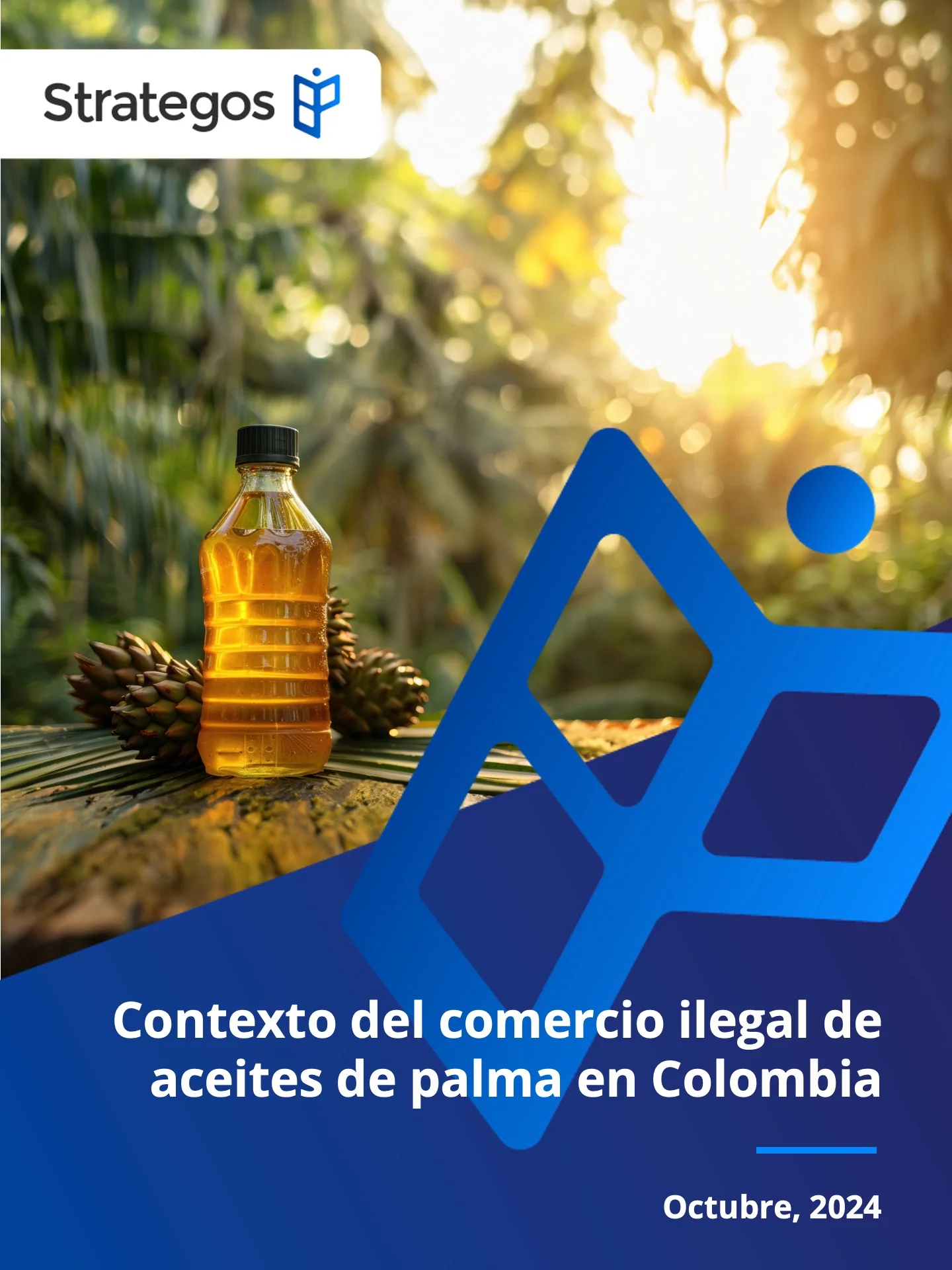
This report analyzes, in context, the illicit trade in palm oil in the Colombian market.
This illicit phenomenon has a long history. Records of this problem exist since at least 1996. According to people in the Palm sector interviewed by Bancóldex and the Productive Transformation Program in 2014, the main problem they face is illegality (understood as smuggling, money laundering and a lack of adequate tariff protection).
This perception is no coincidence. In 2021, according to the DIAN, animal or vegetable fats and oils were the fifth tariff chapter —of all Colombian imports— most affected by distortion and smuggling in Colombia. Moreover, from 2019 to 2022 there is an upward trend in the value of the market distortion generated by smuggling in this tariff chapter. As of 2022, the estimated fiscal cost of this problem exceeds US$120 million; nevertheless, a steeply downward trend is observed in the number of seizures made by the Colombian National Police.
As the case of Norte de Santander shows, this is an expanding criminal rent with serious connections to organized criminal groups, threats, intimidation, money laundering, and even terrorism financing.
In addition, industry information reveals various illicit activities of fierce unfair competition in the sector. Particularly notable are metrology tampering to sell oil contents smaller than those declared on the label, thus deceiving the consumer, and products shipped under remittance in order to evade the corresponding taxes (VAT).
Considering all these forms of illegality, a 2015 estimate indicates that around 30% of the national market is illicit. Illegality in the oil trade: (1) poses risks to public health; (2) deceives the consumer; (3) threatens the formal industry and sources of employment, and (4) damages the public finances of the Colombian State.
Dismantling the illicit trade and unfair competition schemes in the vegetable oils industry in Colombia is a challenge that requires inter-institutional coordination among all control bodies: the ICA, INVIMA, Health Secretariats, the Superintendency of Industry and Commerce, the National Tax and Customs Directorate, and the National Police. For its part, the industry is encouraged to provide more actionable information with operational purposes against illicit players. The Illicit Trade Research, Monitoring and Analysis Centre (CIMA) is a tool made available for these purposes.
See the full analysis here:
Strategos BIP is a consulting firm specialized in investigation, security and the protection of legal trade in Latin America and the Caribbean. It has coverage across the Americas, with a permanent presence in Miami, Bogotá, Mexico and Guatemala. It was founded in 2020 by Brigadier General (RA) Juan Carlos Buitrago Arias of the Colombian National Police, and was the first consultancy focused on preventing and combating illicit trade in the region. It has a team of professionals in diverse areas, including investigation, intelligence, data analysis, security risk management and strategic communication. For more information, you can contact us at: info@strategosbip.com.