Last July, Strategos BIP had the honor of taking part in the ACAMS LATAM Assembly, one of the most important forums in the region on compliance, money laundering prevention and the fight against organized crime. The event, held in Cancún, brought together leaders from the public and private sectors and multilateral organizations to discuss the main challenges and trends in the field.
During our participation, we took an active part in two key sessions:
ACAMS Talk Panel | “Criminal Economies, Illicit Trade and Organized Crime in LATAM & the Caribbean”
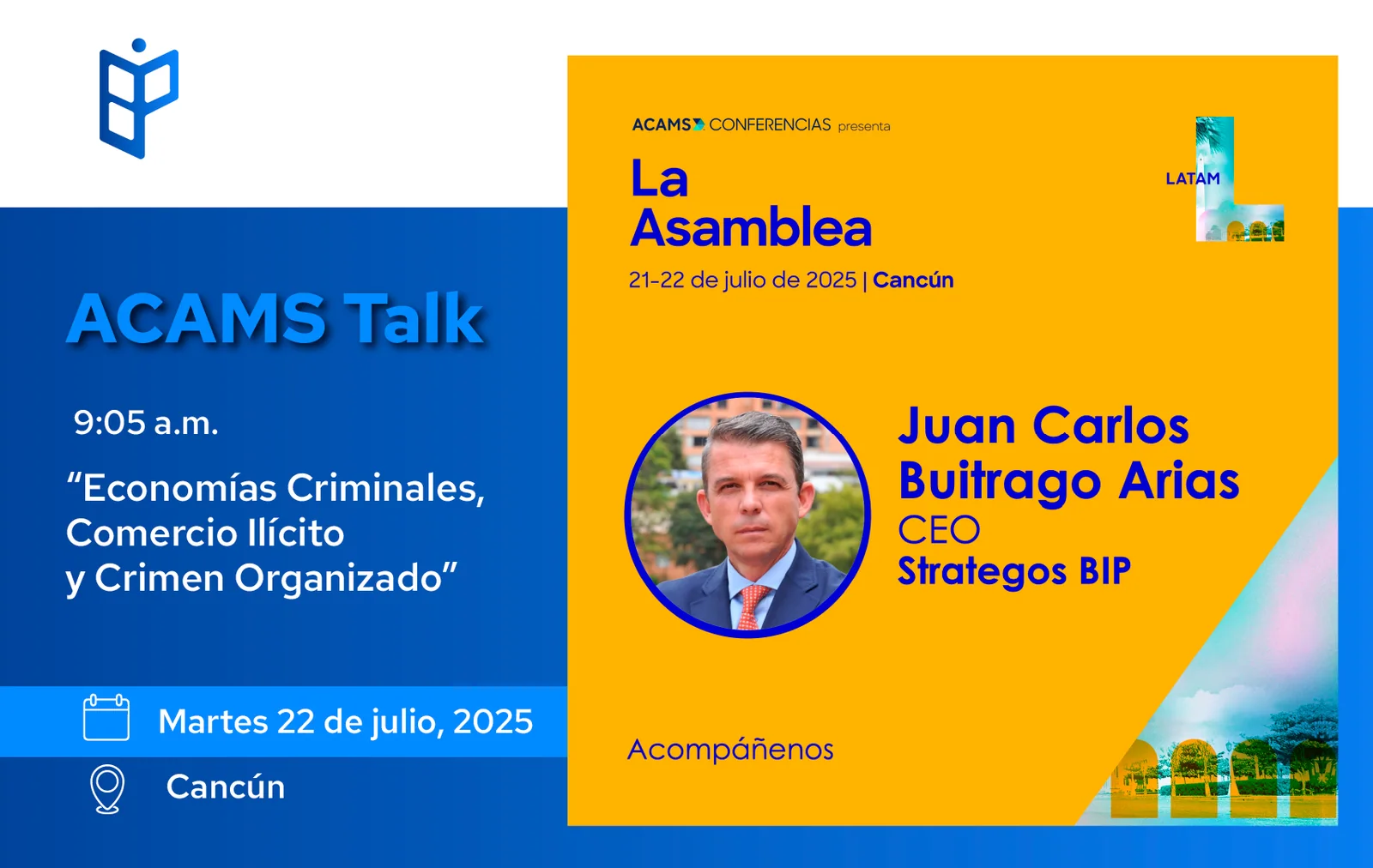
Our CEO, Juan Carlos Buitrago Arias, addressed the growing relevance of illicit trade as a structural source of financing for organized crime and terrorism, highlighting its role in the expansion of criminal economies in Latin America and the Caribbean. In his remarks, he stressed the urgent need for comprehensive, coordinated approaches with regional reach to prevent and combat these threats.
Special Presentation | “The Advance of Terrorism in Latin America”
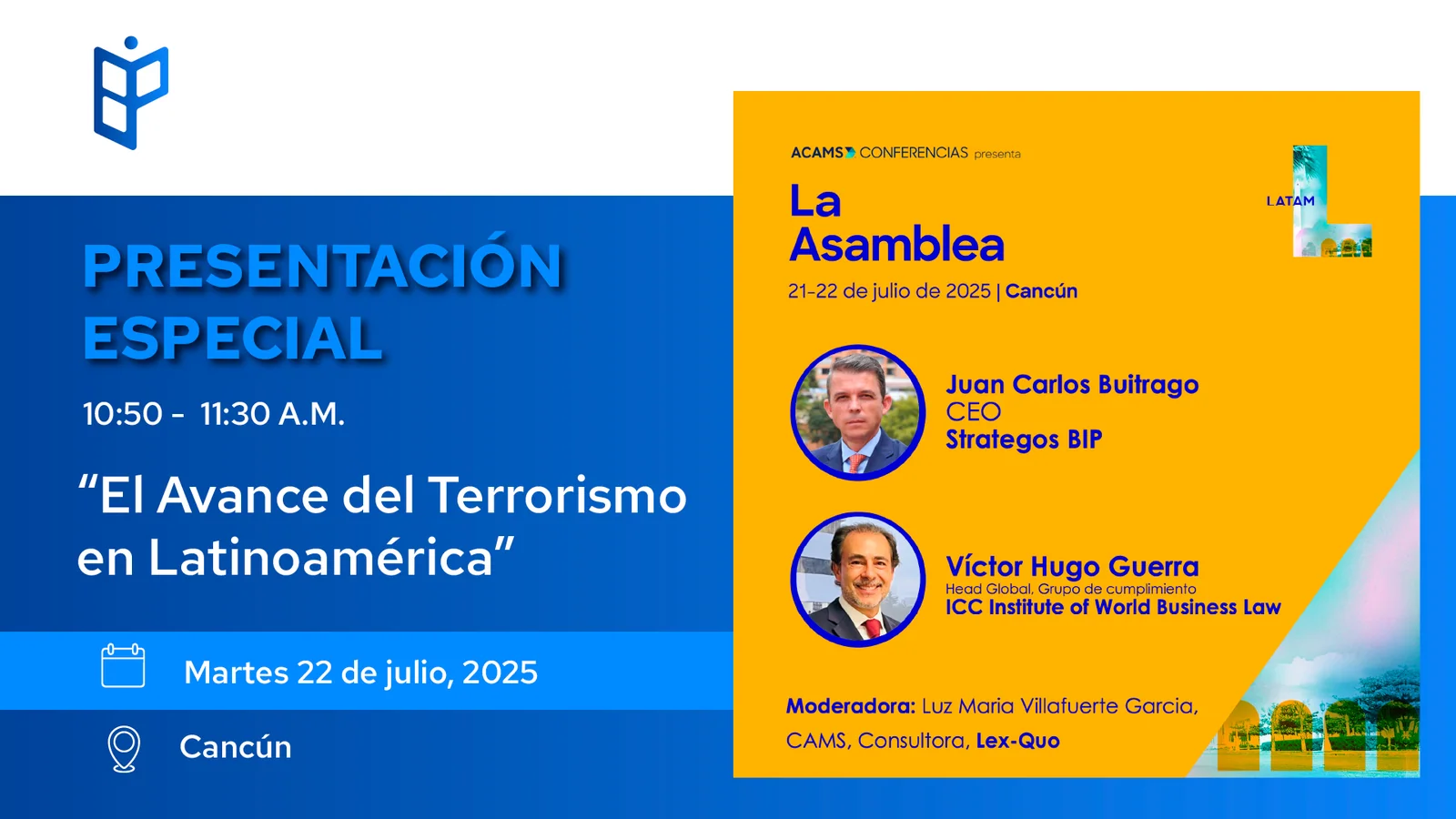
Together with Dr. Víctor Hugo Guerra Hernández, they discussed the implications of the recent announcement by the U.S. Department of State on the designation of drug cartels as terrorist organizations, a reality that Colombia has faced for decades. Both experts analyzed emerging terrorism trends in the region and the importance of mechanisms such as the Triangles Strategy, a public-private alliance with a strategic and operational approach to illicit trade.
During the event, we also had the opportunity to share our most recent publications:
¿Podremos derrotar la hidra de mil cabezas? (Can We Defeat the Thousand-Headed Hydra?) – Editorial Dike
Nuevos desafíos de las economías criminales: estudios de casos latinoamericanos (New Challenges of Criminal Economies: Latin American Case Studies) – Grupo Planeta
We especially thank Mónica Da Rosa, CAMS, for the invitation, and the ACAMS organizing team for an impeccable event with technical content of great value for the region.
At Strategos BIP we reaffirm our commitment to traceability, regional cooperation and the building of institutional capacities to confront the complex challenges that criminal economies impose on our democracies, financial systems and security.