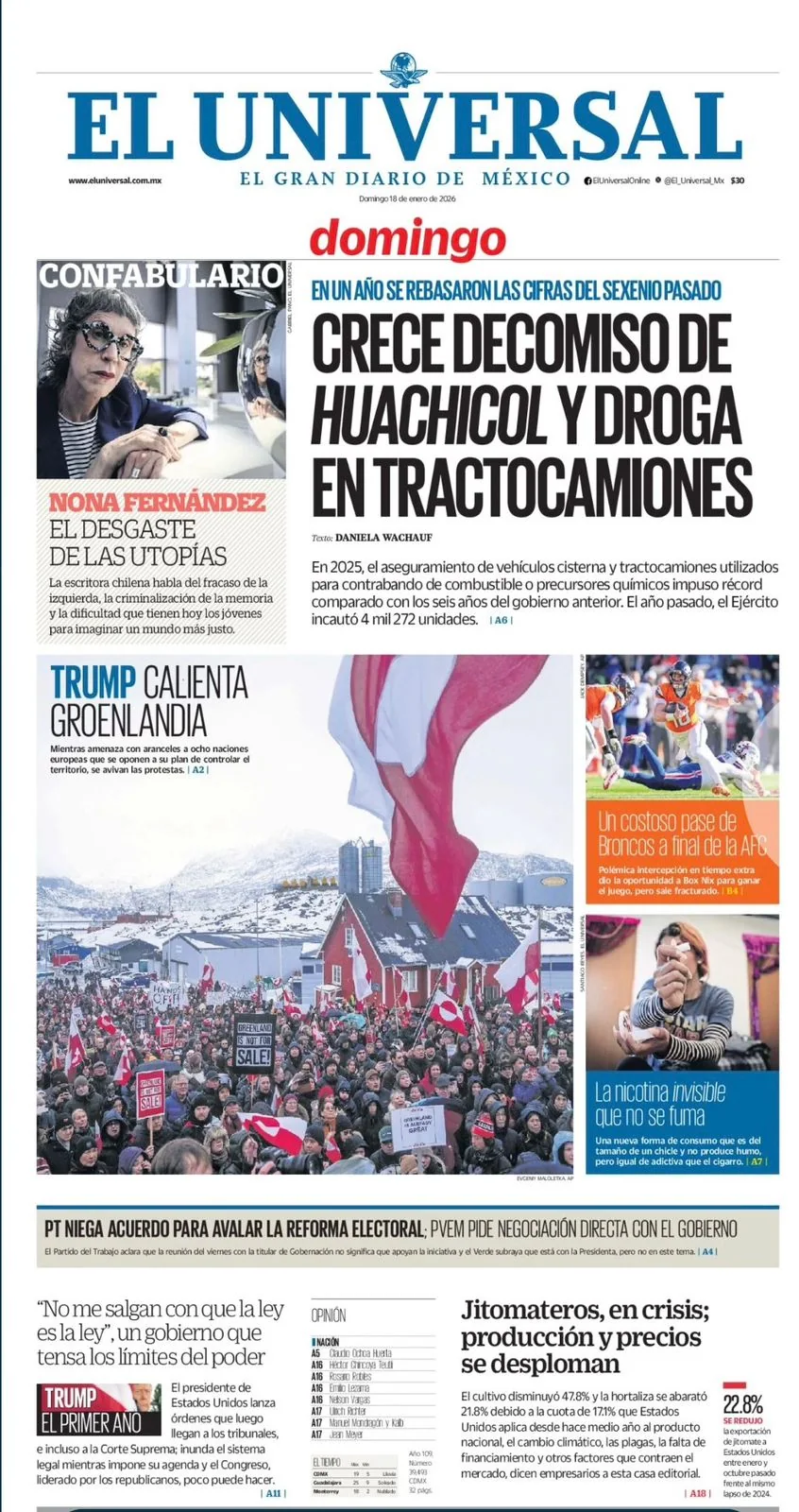
The year 2025 marked a turning point for highway security in Mexico. According to data from the Secretariat of National Defense (Defensa) obtained through freedom-of-information requests, the seizure of heavy vehicles —particularly tractor-trailers and tanker trucks— reached historic figures, revealing a profound transformation in organized crime's logistics for transporting stolen hydrocarbons (huachicol) and chemical precursors.
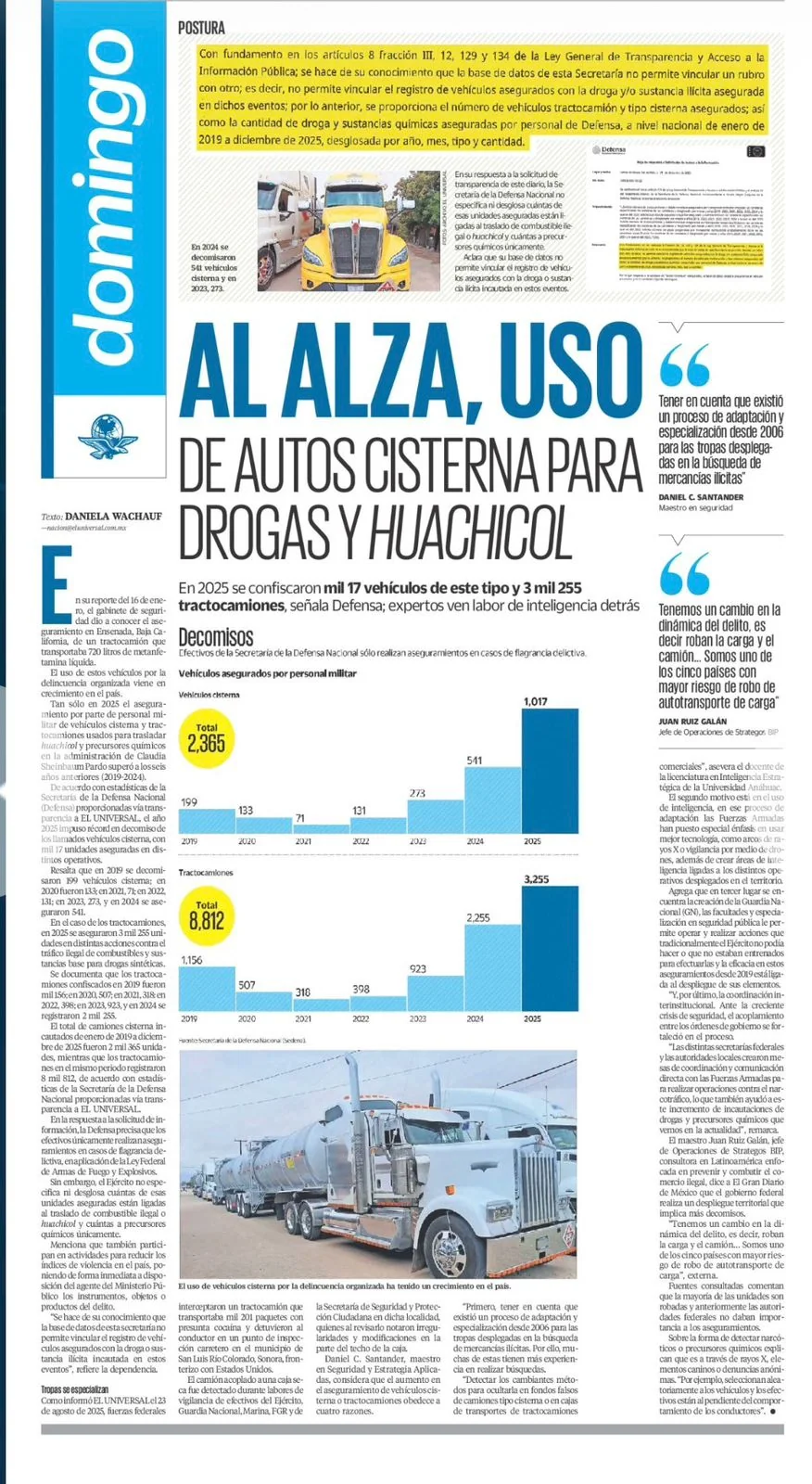
The figures reflect the magnitude of the phenomenon. During 2025, the Mexican Army seized 1,017 tanker-type vehicles, compared with just 199 units in 2019. In parallel, seizures of tractor-trailers exceeded 3,255 units, setting a historic record and confirming the sustained increase in the use of heavy logistics infrastructure by criminal organizations.
Cargo Theft and Appropriation of Logistics Assets
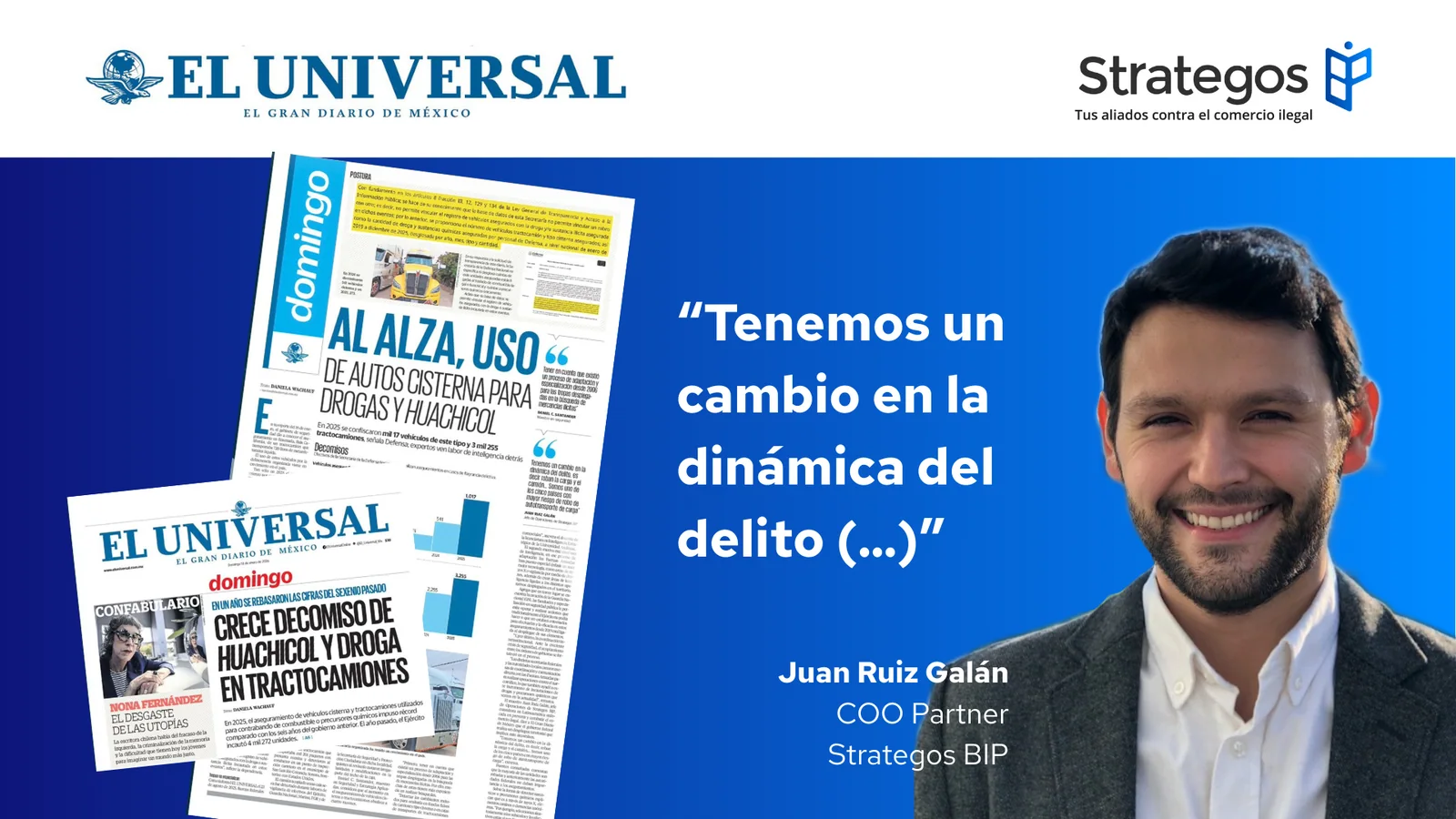
This growth is not only due to greater criminal activity, but to a structural change in the modus operandi of criminal networks. According to Juan Ruiz Galán, Head of Operations at Strategos BIP and security expert, the Mexican market faces a mutation in crime dynamics:
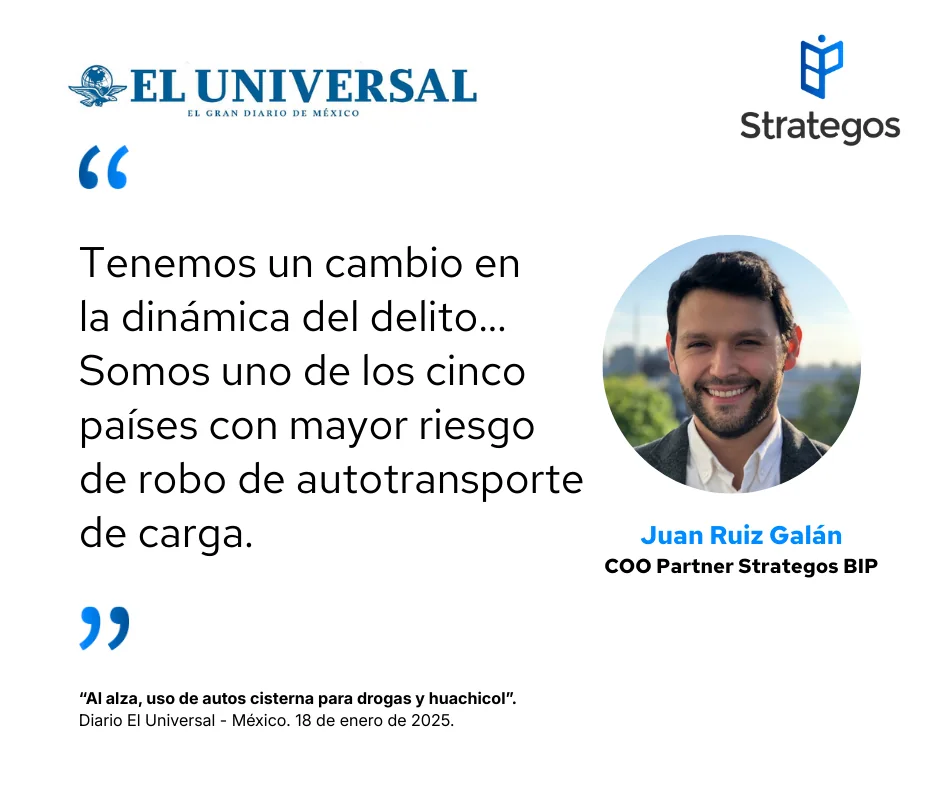
The analysis suggests that criminal organizations have stopped operating exclusively as illegal resale networks and now integrate stolen vehicles into their own illicit supply chains. These assets are used to transport liquid methamphetamine, stolen hydrocarbons and other illegal goods along strategic highway corridors.
Expanding Criminal Logistics and State Response
Although Defensa's official database does not automatically link each seized vehicle to the type of substance transported —due to limitations in the recording systems— the upward trend in seizures is consistent and sustained.
Security specialists identify three key factors behind the increase in interdictions:
Operational specialization: strengthening of the Armed Forces' and the National Guard's capabilities to detect illicit cargo.
Technology applied to highway control: deployment of X-ray arches, drones and non-intrusive inspection systems at strategic points.
Inter-institutional coordination: creation of intelligence working groups that link actions between federal and state authorities.
These advances have made it possible to increase operational effectiveness, although they also show the parallel growth and sophistication of criminal networks.
CIMA and Anticipating Logistics Risk
The intersection of freight theft, hydrocarbon trafficking and drug trafficking significantly raises the risk profile for companies operating on Mexican highways. The line between an ordinary theft event and a structured organized crime operation is increasingly blurred.
From the Illicit Trade Research, Monitoring and Analysis Centre (CIMA) of Strategos BIP these emerging logistics patterns are continuously monitored. Understanding that the seizure or theft of a tractor-trailer may be linked to an integrated criminal chain allows companies to move from a reactive posture to strategic risk management, adjusting routes, schedules and operating protocols based on up-to-date intelligence.
As the analyses by CIMApoint out, prevention in 2026 will increasingly depend on the private sector's ability to integrate logistics intelligence, threat analysis and dynamic monitoring of critical corridors.
Source: this content is an analytical summary based on the news story “Al alza, uso de autos cisterna para drogas y huachicol” (Rising use of tanker trucks for drugs and huachicol), originally published in the newspaper El Universal by journalist Daniela Wachauf on January 18, 2026.
Read the full story here: https://www.eluniversal.com.mx/nacion/crece-decomiso-de-huachicol-y-droga-en-tractocamiones/
Article gallery